If you need an exact copy of a previously filed and processed tax
return and all attachments (including Form W-2), you should complete Form 4506 (PDF), Request for Copy of Tax Return, and mail it to the address listed in the instructions, along with
a $50.00 fee for each tax return requested. The check or money order
for the fee should be made payable to the "United States Treasury,"
and should include your SSN or EIN and the notation "Form 4506 request."
Copies are generally available for returns filed for the current and
past six years. Copies of jointly filed tax returns may be requested
by either spouse and only one signature is required. Allow 60 calendar
days to receive your copies.
Most needs for tax return information can be met with a computer
printout of your return information called a "transcript." A transcript
may be an acceptable substitute for an exact copy of a return by the U.S. Citizenship and Immigration Services and lending agencies for student loans and mortgages.
A "tax return transcript" will show most line items contained on the
return as it was originally filed. If you need a statement of your
tax account, which shows changes that you or the IRS made after the
original return was filed, however, you must request a "tax account
transcript." Both transcripts are generally available for the current
and past three years and are provided free of charge. The period in
which you will receive the transcript varies from within five to ten
business days from the time the IRS receives your request for the
tax return or tax account transcript.
You can obtain a free transcript on the IRS.gov website by going
to the Order a Transcript page. Transcripts may also be ordered by calling
800-908-9946 and following the prompts in the recorded message, or
by completing and mailing a request for a transcript to the address
listed in the instructions.
The IRS has created Form 4506T-EZ (PDF), Short Form Request for Individual Tax Return Transcript, to order a transcript of a Form 1040 series return. The IRS created
this streamlined form to help those taxpayers trying to obtain, modify
or refinance a home mortgage. Transcripts may also be mailed to a
third party, such as a mortgage institution, if specified on the form.
You must sign and date the form giving your consent for the disclosure.
Businesses, partnerships or individuals who need transcript information
from other forms, such as Form W-2 or Form 1099, can use Form 4506-T (PDF), Request for Transcript of
Tax Return, to obtain the information. These transcripts may
also be mailed to a third party if there is consent for the disclosure.
Forms can be downloaded from the IRS.gov website or ordered by calling 800-908-9946.
If you are a taxpayer impacted by a federally declared disaster,
the IRS waives the usual fees and expedites requests for copies of
tax returns for people who need them to apply for benefits or to file
amended returns claiming disaster-related losses. For additional information,
refer to Topic 107, or call the IRS Disaster Assistance Hotline
at 866-562-5227.
Edith I Christian, CPA

Individual and Business Accounting In Waukesha And Milwaukee Counties Call 262-646-2008
Showing posts with label Tax Returns. Show all posts
Showing posts with label Tax Returns. Show all posts
Thursday, January 23, 2014

Friday, April 12, 2013
Last Minute Tax Deductions | Waukesha Tax Preparation
Tax Day is this Monday, April 15. Yes, that's right -- THIS Monday!
Haven't filed your taxes yet? Check out these tips to ensure you and your spouse receive the maximum benefits on your returns, even in the last minute rush to pay good 'ol Uncle Sam.
Haven't filed your taxes yet? Check out these tips to ensure you and your spouse receive the maximum benefits on your returns, even in the last minute rush to pay good 'ol Uncle Sam.
- Be aware of extended tax breaks: This year, in efforts to avoid the fiscal cliff, legislation extended some family-friendly tax breaks that previously expired. This includes the tuition and fees deduction and a credit for energy efficient home improvements, both of which were set to expire after 2011. The tuition and fees deduction can lower your taxable income up to $4,000 for qualified higher education expenses you paid in 2012.
You are eligible to claim a credit for up to 10 percent of the cost of eligible home improvements to your main residence, with a maximum lifetime credit of $500! For example, in 2012, if you and your spouse purchased and installed energy efficient windows and doors or insulation, you may be eligible for this tax break.
click here for the rest of the article
We offer professional services that will satisfy your tax and accounting needs with relative ease. If you are ready to learn more about our offerings, just pick up the phone and give us a ring. Our friendly and accommodating staff is waiting to field your call, answer your questions and discuss your circumstances. When it comes to your finances, every delay can be costly, so don’t waste any more time. Contact Edith I Christian, CPA! 262-646-2008 http://www.edithchristiancpa.net
Wednesday, April 3, 2013
Tax Returns Waukesha | Tax Prepartation Edith Christian
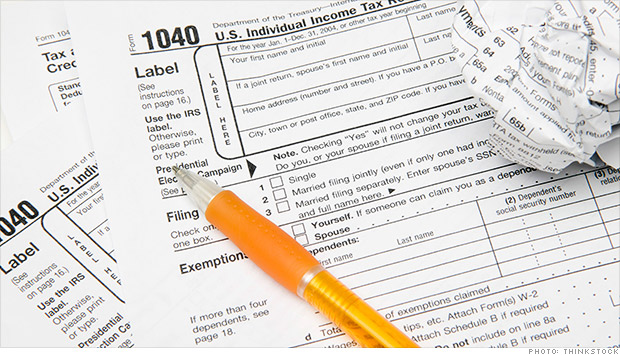
Most people hate filling out tax forms almost as much as they hate forking over dough to Uncle Sam. That's why you should use the simplest tax return form you can, especially if you're still filling out your forms by hand.
But choose carefully. While all the personal income tax forms -- 1040, 1040A and 1040EZ -- are designed to get the appropriate amount of your money to the Internal Revenue Service, the differences in these returns could cost you if you're not paying attention.
The EZ is the shortest and simplest form, Form 1040A is a bit more complex, and the long Form 1040 is the most detailed and potentially difficult. But even though your tax life is simple and straightforward, it might be worth your while to investigate the other two forms. Why? Generally, the longer the form, the more opportunities for tax breaks.
How the EZ could cost you
Take the case of 2012 tax filer Joe P. Taxpayer. Joe finished college last year and got his first full-time job making $40,000. He's single, renting and has no investment income. A perfect 1040EZ filer, right? Sure, if you're Uncle Sam, because Joe will overpay his taxes by using the short form.
Why? The Form 1040EZ doesn't offer Joe some valuable tax breaks found on the other two returns.
Joe has a student loan. By filing Form 1040A he can subtract from his income the $2,500 interest he paid on that debt. He can't do that with the shortest form. Joe also started planning for his retirement by putting $5,000 into a traditional individual retirement account. Because his new employer doesn't offer a company retirement plan, Joe's deductible IRA contribution can reduce his taxable income further, but only if he files the longer form.
By choosing the 1040A over the 1040EZ, suddenly Joe owes taxes on just $32,500 instead of on his full $40,000 salary. And he's dropped into a lower tax bracket -- the 15 percent one instead of the 25 percent tier -- even before he reduces his taxable income further by taking the personal exemption that every taxpayer is allowed and his standard deduction amount.
Joe also would get the chance to reduce his actual bill if he files the longer 1040A. If Joe took a course to improve his job skills and was not reimbursed by his employer for the cost, he could claim the Lifetime Learning tax credit; it's also available on the long Form 1040. The better tax news for Joe is that a credit allows you a dollar-for-dollar reduction of what you owe the IRS. But the only tax credit available on the 1040EZ is the Earned Income Tax Credit, available only to low-income taxpayers.
So, opting to file Form 1040A instead of 1040EZ saved Joe a bundle. And there are even more tax-saving opportunities found on the long Form 1040. They might not apply to Joe, but they could cut your tax bill -- if you take the time to look over each of the forms. Here are the basic guidelines for the three individual tax returns.
Form 1040EZ
The simplest IRS form is the Form 1040EZ. And ever since the IRS doubled the earning limit on filers who use it, the EZ has been available to even more taxpayers.
The ease of the one-page 1040EZ is appealing, but it limits the number of ways to save on your tax bill.You can file the 1040EZ return if:
- Your filing status is single or married filing jointly.
- You're younger than 65. Your spouse also must meet the age requirements if you file a joint return. If you or your spouse's 65th birthday is Jan. 1, then for filing purposes you are considered to have turned 65 last year and therefore cannot file this form.
- You (or your spouse if filing jointly) were not legally blind during the last tax year.
- You have no dependents.
- Your interest income is less than $1,500.
- Your income, or combined incomes for joint filers, is less than $100,000.
As already mentioned, this shortest personal return restricts filers to claiming just one credit: the earned income tax credit, or EITC, a tax break designed to help out individuals who don't make much money.
You also need to look at those other two individual tax returns to take advantage of additional income adjustments and tax credits.
Tuesday, March 5, 2013
Tax Preparation Waukesha | Collage Tax Credits for 2012
The Internal Revenue Service today reminded parents and students that
now is a good time to see if they qualify for either of two college
education tax credits or any of several other education-related tax
benefits.
In general, the American opportunity tax credit, lifetime learning credit and tuition and fees deduction are available to taxpayers who pay qualifying expenses for an eligible student. Eligible students include the primary taxpayer, the taxpayer’s spouse or a dependent of the taxpayer.
Though a taxpayer often qualifies for more than one of these benefits, he or she can only claim one of them for a particular student in a particular year. The benefits are available to all taxpayers — both those who itemize their deductions on Schedule A and those who claim a standard deduction. The credits are claimed on Form 8863 and the tuition and fees deduction is claimed on Form 8917.
The American Taxpayer Relief Act, enacted Jan. 2, 2013, extended the American opportunity tax credit for another five years until the end of 2017. The new law also retroactively extended the tuition and fees deduction, which had expired at the end of 2011, through 2013. The lifetime learning credit did not need to be extended because it was already a permanent part of the tax code.
For those eligible, including most undergraduate students, the American opportunity tax credit will yield the greatest tax savings. Alternatively, the lifetime learning credit should be considered by part-time students and those attending graduate school. For others, especially those who don’t qualify for either credit, the tuition and fees deduction may be the right choice.
Click here for more info
In general, the American opportunity tax credit, lifetime learning credit and tuition and fees deduction are available to taxpayers who pay qualifying expenses for an eligible student. Eligible students include the primary taxpayer, the taxpayer’s spouse or a dependent of the taxpayer.
Though a taxpayer often qualifies for more than one of these benefits, he or she can only claim one of them for a particular student in a particular year. The benefits are available to all taxpayers — both those who itemize their deductions on Schedule A and those who claim a standard deduction. The credits are claimed on Form 8863 and the tuition and fees deduction is claimed on Form 8917.
The American Taxpayer Relief Act, enacted Jan. 2, 2013, extended the American opportunity tax credit for another five years until the end of 2017. The new law also retroactively extended the tuition and fees deduction, which had expired at the end of 2011, through 2013. The lifetime learning credit did not need to be extended because it was already a permanent part of the tax code.
For those eligible, including most undergraduate students, the American opportunity tax credit will yield the greatest tax savings. Alternatively, the lifetime learning credit should be considered by part-time students and those attending graduate school. For others, especially those who don’t qualify for either credit, the tuition and fees deduction may be the right choice.
Click here for more info
Friday, February 8, 2013
Accounting Waukesha | What Tax Forms do I file?
Which Form – 1040, 1040A or 1040EZ?
The three forms used for filing individual federal income tax returns are Form 1040EZ (PDF), Form 1040A (PDF), and Form 1040 (PDF).
Form 1040EZ is the simplest form to fill out. You may use Form 1040EZ if you meet all the following conditions:
Form 1040EZ LinksReferences:
Form 1040EZ Instructions
Filing Options
If you cannot use Form 1040EZ, you may be able to use Form 1040A if:
Form 1040A LinksReferences:
Form 1040A Instructions
Filing Options
Often used Schedules:
Form 1040A or 1040, Schedule B (PDF) - Interest and Ordinary Dividends
Form 1040A or 1040, Schedule R (PDF) - Credit for the Elderly or the Disabled
Form 1040A or 1040, Schedule EIC (PDF) - Earned Income Credit
Form 1040A or 1040, Schedule 8812 (PDF) - Child Tax Credit
Often used Forms:
Form 8917 (PDF) - Tuition and Fees Deduction
Form 2441 (PDF) - Child and Dependent Care Expenses
Form 8863 (PDF) - Education Credits (American Opportunity and Lifetime Learning Credits)
Form 8888 (PDF) - Allocation of Refund (Including Savings Bond Purchases)
Finally, you must use Form 1040 under certain circumstances, such as:
Form 1040 LinksReferences:
Form 1040 Instructions
1040 Central
Filing Options
Often used Schedules:
Form 1040, Schedule A (PDF) - Itemized Deductions
Form 1040A or 1040, Schedule B (PDF) - Interest and Ordinary Dividends
Form 1040, Schedule C-EZ (PDF) - Net Profit From Business
Form 1040, Schedule D (PDF) - Capital Gains and Losses
Form 1040, Schedule E (PDF) - Supplemental Income and Loss
Form 1040A or 1040, Schedule EIC (PDF) - Earned Income Credit
Form 1040A or 1040, Schedule 8812 (PDF) - Child Tax Credit
Form 1040A or 1040, Schedule R (PDF) - Credit for the Elderly or the Disabled
Often used Forms:
Form 8917 (PDF) - Tuition and Fees Deduction
Form 2441 (PDF) - Child and Dependent Care Expenses
Form 8863 (PDF) - Education Credits (American Opportunity and Lifetime Learning Credits)
Form 8888 (PDF) - Allocation of Refund (Including Savings Bond Purchases)
If you were a nonresident alien during the tax year and you were married to a U.S. citizen or resident alien, you may use any one of these three forms, based on your circumstances, only if you elect to file a joint return with your spouse. Other nonresident aliens may have to file Form 1040NR (PDF) or Form 1040NR-EZ (PDF). For more information on resident and nonresident aliens, refer to Topic 851 and Publication 519, U. S. Tax Guide for Aliens, Chapter 7.
The three forms used for filing individual federal income tax returns are Form 1040EZ (PDF), Form 1040A (PDF), and Form 1040 (PDF).
Form 1040EZ is the simplest form to fill out. You may use Form 1040EZ if you meet all the following conditions:
- Your filing status is single or married filing jointly
- You claim no dependents
- You, and your spouse if filing a joint return, were under age 65 on January 1, 2013, and not blind at the end of 2012
- You have only wages, salaries, tips, taxable scholarship and fellowship grants, unemployment compensation, or Alaska Permanent Fund dividends, and your taxable interest was not over $1,500
- Your taxable income is less than $100,000
- Your earned tips, if any, are included in boxes 5 and 7 of your Form W-2
- You do not owe any household employment taxes on wages you paid to a household employee
- You are not a debtor in a Chapter 11 bankruptcy case filed after October 16, 2005
- You do not claim any adjustments to income, such as a deduction for IRA contributions, a student loan interest deduction, an educator expenses deduction, or a tuition and fees deduction
- You do not claim any credits other than the earned income credit
Form 1040EZ LinksReferences:
Form 1040EZ Instructions
Filing Options
If you cannot use Form 1040EZ, you may be able to use Form 1040A if:
- Your income is only from wages, salaries, tips, taxable scholarships and fellowship grants, interest, or ordinary dividends, capital gain distributions, pensions, annuities, IRAs, unemployment compensation, taxable social security or railroad retirement benefits, and Alaska Permanent Fund dividends
- Your taxable income is less than $100,000
- You do not itemize deductions
- You did not have an alternative minimum tax adjustment on stock you acquired from the exercise of an incentive stock option
- Your taxes are only from the Tax Table, the alternative minimum tax, recapture of an education credit, Form 8615 or the Qualified Dividends and Capital Gain Tax Worksheet
- Your only adjustments to income are the IRA deduction, the student loan interest deduction, the educator expenses deduction, the tuition and fees deduction, and
- The only credits you are claiming are the credit for child and dependent care expenses, the earned income credit, the credit for the elderly or the disabled, education credits, the child tax credit, the additional child tax credit, and the retirement savings contribution credit
Form 1040A LinksReferences:
Form 1040A Instructions
Filing Options
Often used Schedules:
Form 1040A or 1040, Schedule B (PDF) - Interest and Ordinary Dividends
Form 1040A or 1040, Schedule R (PDF) - Credit for the Elderly or the Disabled
Form 1040A or 1040, Schedule EIC (PDF) - Earned Income Credit
Form 1040A or 1040, Schedule 8812 (PDF) - Child Tax Credit
Often used Forms:
Form 8917 (PDF) - Tuition and Fees Deduction
Form 2441 (PDF) - Child and Dependent Care Expenses
Form 8863 (PDF) - Education Credits (American Opportunity and Lifetime Learning Credits)
Form 8888 (PDF) - Allocation of Refund (Including Savings Bond Purchases)
Finally, you must use Form 1040 under certain circumstances, such as:
- Your taxable income is $100,000 or more
- You have certain types of income such as unreported tips; certain nontaxable distributions; self-employment earnings; or income received as a partner, a shareholder in an "S" Corporation, or a beneficiary of an estate or trust
- You itemize deductions or claim certain tax credits or adjustments to income, or
- You owe household employment taxes
Form 1040 LinksReferences:
Form 1040 Instructions
1040 Central
Filing Options
Often used Schedules:
Form 1040, Schedule A (PDF) - Itemized Deductions
Form 1040A or 1040, Schedule B (PDF) - Interest and Ordinary Dividends
Form 1040, Schedule C-EZ (PDF) - Net Profit From Business
Form 1040, Schedule D (PDF) - Capital Gains and Losses
Form 1040, Schedule E (PDF) - Supplemental Income and Loss
Form 1040A or 1040, Schedule EIC (PDF) - Earned Income Credit
Form 1040A or 1040, Schedule 8812 (PDF) - Child Tax Credit
Form 1040A or 1040, Schedule R (PDF) - Credit for the Elderly or the Disabled
Often used Forms:
Form 8917 (PDF) - Tuition and Fees Deduction
Form 2441 (PDF) - Child and Dependent Care Expenses
Form 8863 (PDF) - Education Credits (American Opportunity and Lifetime Learning Credits)
Form 8888 (PDF) - Allocation of Refund (Including Savings Bond Purchases)
If you were a nonresident alien during the tax year and you were married to a U.S. citizen or resident alien, you may use any one of these three forms, based on your circumstances, only if you elect to file a joint return with your spouse. Other nonresident aliens may have to file Form 1040NR (PDF) or Form 1040NR-EZ (PDF). For more information on resident and nonresident aliens, refer to Topic 851 and Publication 519, U. S. Tax Guide for Aliens, Chapter 7.
Saturday, January 26, 2013
Waukesha Tax Preparation | Edith Christian CPA | Earned Income Tax Credit
The Earned Income Tax Credit is something that should be taken advantage of especially in this economy. Keep more of what you earn.
Full article from IRS here
Go to our website for more info on how we can help you with your Waukesha Tax Preparation!
Full article from IRS here
EITC, the Earned Income Tax Credit, sometimes called EIC is a tax credit to help you keep more of what you earned. It is a refundable federal income tax credit for low to moderate income working individuals and families. Congress originally approved the tax credit legislation in 1975 in part to offset the burden of social security taxes and to provide an incentive to work. When EITC exceeds the amount of taxes owed, it results in a tax refund to those who claim and qualify for the credit.
To qualify, you must meet certain requirements and file a tax return, even if you do not owe any tax or are not required to file.
EITC Assistant--Find out if you qualify for EITC this year
Find out if you are eligible for EITC by answering questions and providing basic income information. The EITC Assistant also estimates the amount of your EITC. Click here for the English version of the EITC Assistant or o hag click aquí para seleccionar la Versión en Español del Asistente,
Quick Guide to Topics on this Page (please scroll down for the following topics and more)
- Do You Qualify for EITC?
- Need Help Preparing Your Return?
- Find information on EITC and other Public Benefits and Other Child-Related Tax Benefits
- Other Resources and Tips for Claiming EITC
- Resources and Tips if You Receive a Notice from IRS or are Audited
- IRS Reports on EITC
- Missing Children Link
- For You, Publication 4935
- For Return Preparers, Publication 4933
Find Specific EITC Information for:
EITC Central hosts the Partner Toolkit, the Tax Return Preparer Toolkit, Marketing Express and Information for the Press. |
Do You Qualify for EITC?
To qualify for EITC you must have earned income from employment, self-employment or another source and meet certain rules. Also, you must either meet the additional rules for workers without a qualifying child or have a child that meets all the qualifying child rules for you.
Earned Income
Find out more about what is earned income here.
EITC Rules for Everyone
Find out about the rules you and your spouse, if you file a joint return, must meet to claim EITC.
Qualifying Child Rules
If you and your spouse, if filing a joint return, meet the EITC rules for Everyone and you have a child who lives with you, you may be eligible for EITC. Your child must pass the relationship, age, residency, and joint return tests to be your qualifying child. All four tests must be met for each child you claim. Find the rules for a qualifying child for EITC here.
Rules for those Without a Qualifying Child
If you and your spouse, if filing a joint return, meet the EITC Rules for Everyone and you do not have a qualifying child, you may be eligible for EITC. Find the rules for those without a qualifying child here.
Go to our website for more info on how we can help you with your Waukesha Tax Preparation!
Monday, January 7, 2013
Tax Preparation Tips | Edith Christian CPA
Tax Preparation Tips | Waukesha CPA Edith Christian
It’s common for people to cash their paychecks month after month without taking the time to review what’s really on them. While you most certainly have withholdings included in your check, make sure everything adds up. Sometimes, even employers make mistakes, and this adjustment can affect you come tax time.
Being ready for your tax preparation can help make the process much more painless. Its never to early to start planning for April 15th. Waukesha Accountant and tax return specialist Edith Christian CPA has a few tips for youIt’s a great idea to have everything in its place when it comes time to filing your taxes, so make sure that you file away your 2011 tax returns so you can easily access them come 2013.
Review Your Paycheck Information
Withhold Less from Your Paycheck
It may be nice to get a larger tax refund, but you may want to adjust your withholdings. If you do, you can take away more each month and get less at tax time, something that is welcoming to families on a budget.
Decrease Taxable Income
It’s almost the end of the year, so now is the time where people should look for itemized deductions that can save money come tax time. For example, maybe there is an early property tax payment you can make that will help for itemized deductions come tax time. The goal is to lower your taxable income to lower your liability.
Perfect Your Recordkeeping Skills
From receipts to charity donations, it’s essential that you have everything accounted for and in its place. If you don’t have a system under way, now is the time to make one. You don’t want 12 months of receipts and paperwork lying around, and you want to make the most of your deductions. If you’ve moved away from paper copies, scan important documents into your computer.
Find Your Tax Professional
Finally, find your tax accountant who will be helping you during tax season. You don’t want to rush close to tax season or have to settle for someone you don’t enjoy working with. Instead, use this time to choose a professional you trust today so that you can
Saturday, December 29, 2012
Waukesha Tax Preparer | Edith Christian CPA
Waukesha Tax Preparer Edith Christian CPA is available to assist you and your family or business with it's Wisconsin and Federal taxes.
 Don’t squander away your precious time by struggling with complicated
IRS forms and complex bookkeeping chores. You can get fast and effective
solutions to all of your tax and accounting affairs when you employ Edith I Christian, CPA.
We know how stressful your life can be. But when you call on us, you
can relax a little bit. Our professionalism, integrity and trusty service
make your life less taxing. Plus, we focus on delivering peerless
customer service to ensure the satisfaction of every single client. Our
name is indelibly linked with characteristics such as honesty,
reliability and outright excellence. You can count on us! Are you ready
for more information? Call today!
Don’t squander away your precious time by struggling with complicated
IRS forms and complex bookkeeping chores. You can get fast and effective
solutions to all of your tax and accounting affairs when you employ Edith I Christian, CPA.
We know how stressful your life can be. But when you call on us, you
can relax a little bit. Our professionalism, integrity and trusty service
make your life less taxing. Plus, we focus on delivering peerless
customer service to ensure the satisfaction of every single client. Our
name is indelibly linked with characteristics such as honesty,
reliability and outright excellence. You can count on us! Are you ready
for more information? Call today!
262-646-2008
N9 W29360 Thames Road
Waukesha, WI 53188
262-646-2008
N9 W29360 Thames Road
Waukesha, WI 53188
Tuesday, December 18, 2012
Waukesha Tax Preparation Services
Tax Preparation and Accounting is available to you in Waukesha and Milwaukee Wi. Contact us for an appointement.
 Don’t squander away your precious time by struggling with complicated
IRS forms and complex bookkeeping chores. You can get fast and effective
solutions to all of your tax and accounting affairs when you employ Edith I Christian, CPA.
We know how stressful your life can be. But when you call on us, you
can relax a little bit. Our professionalism, integrity and trusty service
make your life less taxing. Plus, we focus on delivering peerless
customer service to ensure the satisfaction of every single client. Our
name is indelibly linked with characteristics such as honesty,
reliability and outright excellence. You can count on us! Are you ready
for more information? Call today.
Don’t squander away your precious time by struggling with complicated
IRS forms and complex bookkeeping chores. You can get fast and effective
solutions to all of your tax and accounting affairs when you employ Edith I Christian, CPA.
We know how stressful your life can be. But when you call on us, you
can relax a little bit. Our professionalism, integrity and trusty service
make your life less taxing. Plus, we focus on delivering peerless
customer service to ensure the satisfaction of every single client. Our
name is indelibly linked with characteristics such as honesty,
reliability and outright excellence. You can count on us! Are you ready
for more information? Call today.News from CNN on tax breaks for parents
As the countdown to a fiscal cliff reaches its final days, four key tax breaks for parents are hanging in the balance.
Lawmakers and President Obama continue to butt heads about which tax cuts should be extended. And unless a deal is inked by the end of the year, the Child Tax Credit, Earned Income Tax Credit, Child and Dependent Care Credit and the American Opportunity Credit will revert to lower levels on Jan. 1.
If this happens, many families will be worse off by hundreds -- or even thousands -- of dollars, according to Roberton Williams, a senior fellow at the Tax Policy Center.
Some families could take a hit on several fronts if they typically qualify for more than one tax break.
Related: Fiscal cliff -- Years of self-made messes
For example, a low-income couple with three kids will lose as much as $1,500 from expiring provisions of the Child Tax Credit. If their income is low enough, they could also see a smaller refund from the Earned Income Tax Credit, and benefits from the Child and Dependent Care Credit could be reduced as well.
1. Child Tax Credit
The Child Tax Credit allows lower-income parents to claim as much as $1,000 for each child under age 17.
Under the Bush tax cuts, the maximum value of the credit was doubled to $1,000. Obama's 2010 Tax Relief Act then extended the credit until the end of this year and made it so families whose income tax is lower than the credit's value could receive more of the credit in a cash refund once any tax liability is zeroed out. The credit phases out for married couples whose income is $110,000 or for single people with income of $75,000 or more.
Should the Bush and Obama provisions expire, the tax break will drop back to a maximum of $500, and only working families with three or more children will be eligible to receive cash refunds.
A couple with two children could therefore end up paying an added $1,000 in taxes next year. Since they have fewer than three children, they will no longer be eligible for a cash refund. And if they don't owe any taxes, they can't apply the credit either, said Williams.
2. Child and Dependent Care Tax Credit
This credit allows working parents -- or those looking for work -- to report up to $3,000 of child care-related expenses per child, up to a maximum of $6,000 per family. Families can receive up to 35% of their expenses as a credit, with lower-income families receiving the highest percentages.
Prior to the Bush tax cuts, parents could only report up to $2,400 per child or $4,800 per family, and families received a maximum credit of just 30% of expenses.
Should the tax breaks expire, the credit will revert to these lower levels. That would mean the largest credit that parents with two children could receive next year would be $1,440, compared to $2,100 currently.
Saturday, December 15, 2012
Monday, December 10, 2012
Waukesha Tax Accountant | Dependents
Who Can I Claim as a Dependent: There are two types of exemptions, personal exemptions and exemptions for dependents. A dependent’s exemption is an amount you can claim on your tax return to reduce your taxable income. This can result in a decrease in tax and increase the amount of your refund. You are allowed one exemption for each person you can claim as a dependent. You usually can claim exemptions for yourself, your spouse and each person you can claim as a dependent. You may lose part of the dollar amount of your exemptions if your adjusted gross income is above a certain amount.For more info click here for IRS.gov website
Information You Will Need:
Estimated Completion Time: 15 minutes. However: 5 minutes of inactivity will end the interview and you will be forced to start over.
- Citizenship status, marital status, relationship to the dependent and the amount of support provided
- Basic income information such as your adjusted gross income
- The terms of your divorce or separation agreement if you are the divorced or separated parent of the potential dependent
- If no person supplied more than half of the potential dependent's support, the terms of any multiple support agreement you may have
The following interview covers the same questions you would answer if you called our toll-free tax assistance telephone number or if you came into a Taxpayer Assistance Center.
Monday, December 3, 2012
Milwaukee Taxes | Standard Tax information | Edith Christian CPA
The standard deduction is a dollar amount that reduces the amount
of income on which you are taxed. In general, the standard deduction
is adjusted each year for inflation and varies according to your filing
status. You cannot take the standard deduction if you itemize deductions.
Your standard deduction consists of the basic standard deduction and any additional standard deduction for age or blindness.
The basic standard deduction of an individual who can be claimed as a dependent on another person's tax return is the greater of:
If you or your spouse were age 65 or older or blind at the end of the year, be sure to claim an additional standard deduction by checking the appropriate boxes for age or blindness on Form 1040A (PDF) or Form 1040 (PDF). You may not use Form 1040EZ (PDF) to claim an additional standard deduction.
Certain taxpayers are not entitled to the standard deduction. They are:
Your standard deduction consists of the basic standard deduction and any additional standard deduction for age or blindness.
The basic standard deduction of an individual who can be claimed as a dependent on another person's tax return is the greater of:
- An amount specified by law, or
- The individual's earned income plus a specified amount (but the total cannot be more than the basic standard deduction for his or her filing status)
If you or your spouse were age 65 or older or blind at the end of the year, be sure to claim an additional standard deduction by checking the appropriate boxes for age or blindness on Form 1040A (PDF) or Form 1040 (PDF). You may not use Form 1040EZ (PDF) to claim an additional standard deduction.
Certain taxpayers are not entitled to the standard deduction. They are:
- A married individual filing a separate return whose spouse itemizes deductions;
- An individual who was a nonresident alien or dual status alien during any part of the year (note that residents of India may be able to claim the standard deduction if they meet certain criteria. Refer to Publication 519, U.S. Tax Guide for Aliens, for more information);
- An individual who files a return for a period of less than 12 months due to a change in his or her annual accounting period; or
- An estate or trust, common trust fund, or partnership.
- More info click here http://www.irs.gov/taxtopics/tc551.html
Tuesday, November 27, 2012
Waukesha Accountant | Edith Christian CPA | Itemize
Should I itemize?
You should itemize deductions if your total deductions are more than the standard deduction amount. Also, if your standard deduction is zero, you should itemize any deductions you have if:- You are married and filing a separate return, and your spouse itemizes deductions,
- You are filing a tax return for a short tax year because of a change in your annual accounting period, or
- You are a nonresident or dual-status alien during the year. You are considered a dual-status alien if you were both a nonresident and resident alien during the year.
When to itemize
You may benefit from itemizing your deductions on Schedule A (Form 1040) if you:
-
Do not qualify for the standard deduction, or the amount you can claim is limited,
-
Had large uninsured medical and dental expenses during the year,
-
Paid interest and taxes on your home,
-
Had large unreimbursed employee business expenses or other miscellaneous deductions,
-
Had large uninsured casualty or theft losses,
-
Made large contributions to qualified charities, or
-
Have total itemized deductions that are more than the standard deduction to which you otherwise are entitled.
-
Publication 17, Your Federal Income Tax
-
Publication 463, Travel, Entertainment, Gift, and Car Expenses
-
Publication 501, Exemptions, Standard Deduction, and Filing Information
-
Publication 502, Medical and Dental Expenses
-
Pub 526, Charitable Contributions
-
Pub 529, Miscellaneous Deductions
-
Publication 530, Tax Information for First-Time Homeowners
-
Pub 535, Business Expenses
-
Publication 544, Sales and Other Dispositions of Assets
-
Publication 547,Casualties, Disasters, and Thefts
-
Publication 561, Determining the Value of Donated Property
-
Pub 584, Casualty, Disaster, and Theft Loss Workbook
-
Pub 2194 Disaster Losses Kit for Individuals
-
Publication 936, Home Mortgage Interest Deduction
-
Publication 970, Tax Benefits for Education
-
Form 2106, Employee Business Expenses
-
Form 2106-EZ, Unreimbursed Employee Business Expenses
-
Form 8283, Noncash Charitable Contributions
-
Inst 8283, Instructions
Tuesday, November 20, 2012
Milwaukee Accountant | Edith Christian | Employement Taxes
Federal Income Tax and Social Security and Medicare Taxes
You generally must withhold federal income tax from your employees' wages. You withhold part of Social Security and Medicare taxes from your employees' wages and you pay a matching amount yourself. To figure how much to withhold from each wage payment, use the employee's Form W-4 and the methods described in Publication 15, Employer's Tax Guide and Publication 15-A, Employer's Supplemental Tax Guide (PDF).The Internal Revenue Service recently released instructions to help employers implement the 2011 and 2012 cut in payroll taxes, along with new income-tax withholding tables that employers will use during 2011 and 2012.
Employers should start using the new withholding tables and reducing the amount of Social Security tax withheld as soon as possible in 2011, but not later than Jan. 31, 2011.
Notice 1036 (PDF) contains the percentage method income tax withholding tables, the lower Social Security withholding rate, and related information that most employers need to implement these changes. Publication 15, (Circular E), Employers Tax Guide (PDF), contains the percentage method tables and the wage bracket tables that some employers use.
Federal Unemployment (FUTA) Tax
You report and pay FUTA tax separately from Federal Income tax, and Social Security and Medicare taxes. You pay FUTA tax only from your own funds. Employees do not pay this tax or have it withheld from their pay. Refer to Publication 15, Employer's Tax Guide and Publication 15-A, Employer's Supplemental Tax Guide (PDF) for more information on FUTA tax.Employers in some states may owe more tax under the Federal Unemployment Tax Act (FUTA) than they expect if they operate in a credit reduction state. Employers in credit reduction states must increase the FUTA tax rate on wages subject to taxes under that state’s Unemployment Insurance (UI) program when they prepare their Form 940, Employer’s Annual Federal Unemployment (FUTA) Tax Return.
Self-Employment Tax
Self-employment tax (SE tax) is a social security and Medicare tax primarily for individuals who work for themselves. It is similar to the social security and Medicare taxes withheld from the pay of most wage earners.Depositing Employment Taxes
Beginning January 1, 2011, taxpayers must deposit all depository taxes (such as employment tax, excise tax, and corporate income tax) electronically using the Electronic Federal Tax Payment System (EFTPS). Forms 8109 and 8109-B, Federal Tax Deposit Coupon, cannot be used after December 31, 2010. See Treasury Decision 9507 for more information.Reporting Employment Taxes
In general, employers must report federal income taxes
withheld, and the employer’s and employees’ shares of social security
and Medicare taxes (collectively “employment taxes”) on either Forms 941, Employer's QUARTERLY Federal Tax Return (PDF) ( Instructions (PDF) available here), or Form 944, Employer’s ANNUAL Federal Tax Return (PDF) ( Instructions (PDF) available here). Form 943, Employer's Annual Federal Tax Return for Agricultural Employees (PDF) ( Instructions (PDF) available here) is used by employers who pay wages to farmworkers.
If you have been filing Forms 941 and believe your
employment taxes for the calendar year will be $1,000 or less, and you
would like to file Form 944 instead of Forms 941, you must contact the
IRS to request to file Form 944 rather than Form 941. You must receive
written notice from the IRS to file Form 944 instead of Forms 941 before
you may file this form. Refer to Certain Taxpayers May File Their Employment Taxes Annually for more information.
Conversely, if you received notice from the IRS and have
been filing Form 944 but would like to file Forms 941 instead, you must
contact the IRS to request to file Forms 941. You must receive written
notice from the IRS to file Forms 941 instead of Form 944 before you may
file these forms. Refer to Certain Taxpayers May File Their Employment Taxes Annually for more information.
Report FUTA taxes on Form 940, Employer's Annual Federal Unemployment (FUTA) Tax Return (PDF) ( Instructions (PDF) available here).
e-file for Business and Self-Employed Taxpayers
Whether you're a business, big or small, or are self-employed you'll find an e-file for business filing option that meets your needs. Use IRS e-file for Employment Tax Returns, Information Returns, Partnerships, Corporations, Estates & Trusts, plus Exempt Organizations.Preparing and Filing Form W-2
At the end of the year, the employer must complete Form W-2, Wage and Tax Statement (PDF) to report wages, tips and other compensation paid to an employee. A copy of this form must be given to the employee by January 31st after the end of the year. You must also send a copy of the W-2 to the Social Security Administration (SSA). Employers can prepare and file up to 20 W-2s at a time at the Social Security Administration’s Web site. Using SSA’s online W-2 filing, employers can also print out all the necessary copies of the W-2 for their employees, state taxing agencies, etc.Correcting/Adjusting Employment Taxes
If correcting employment tax errors on previously filed employment tax returns is required, refer to Correcting Employment Taxes.Voluntary Classification Settlement Program
The Voluntary Classification Settlement Program (VCSP) is a new optional program that provides taxpayers with an opportunity to reclassify their workers as employees for future tax periods for employment tax purposes with partial relief from federal employment taxes for eligible taxpayers that agree to prospectively treat their workers (or a class or group of workers) as employees. To participate in this new voluntary program, the taxpayer must meet certain eligibility requirements, apply to participate in the VCSP by filing Form 8952, Application for Voluntary Classification Settlement Program, and enter into a closing agreement with the IRS.Outsourcing Payroll Duties
If you outsource your payroll, refer to Outsourcing Payroll and Third Party Payers.Independent Contractor (Self-Employed) or Employee?
Which workers are considered employees? Before you can know how to treat payments you make for services, you must first know the business relationship that exists between you and the person performing the services. Refer to Independent Contractor (Self-Employed) or Employee? for more information.Combined Annual Wage Reporting (CAWR)
Combined Annual Wage Reporting (CAWR) is a Document Matching Program that compares the Employee Wage Information reported by the employer to the Internal Revenue Service (IRS) and the Social Security Administration (SSA). If the amounts reported to the IRS do not match those from SSA, you may receive a notice asking for the reason for the discrepancy. If you do not respond timely, IRS may compute the additional taxes and/or penalties due and send you a bill. If you receive a notice CP253 or Letter 99C regarding missing Form(s) W-2, refer to Combined Annual Wage Reporting Missing Form W-2 Inquiries. If you receive a notice CP251 or Letter 99C regarding underreported employment taxes refer to Combined Annual Wage Reporting Employment Tax Problem Inquiries.Additional Medicare Tax
Beginning January 1, 2013, the Additional Medicare Tax applies to an individual’s Medicare wages, Railroad Retirement Tax Act compensation, and self-employment income that exceeds a threshold amount based on the taxpayer’s filing status.Employers are responsible for withholding the 0.9% Additional Medicare Tax on an individual’s wages and compensation paid in excess of $200,000 in a calendar year. An employer is required to begin withholding Additional Medicare Tax in the pay period in which it pays wages and compensation in excess of $200,000 to an employee.
There is no employer match for the Additional Medicare Tax.
For more information click here
Subscribe to:
Posts (Atom)